
Last updated November 24, 2026
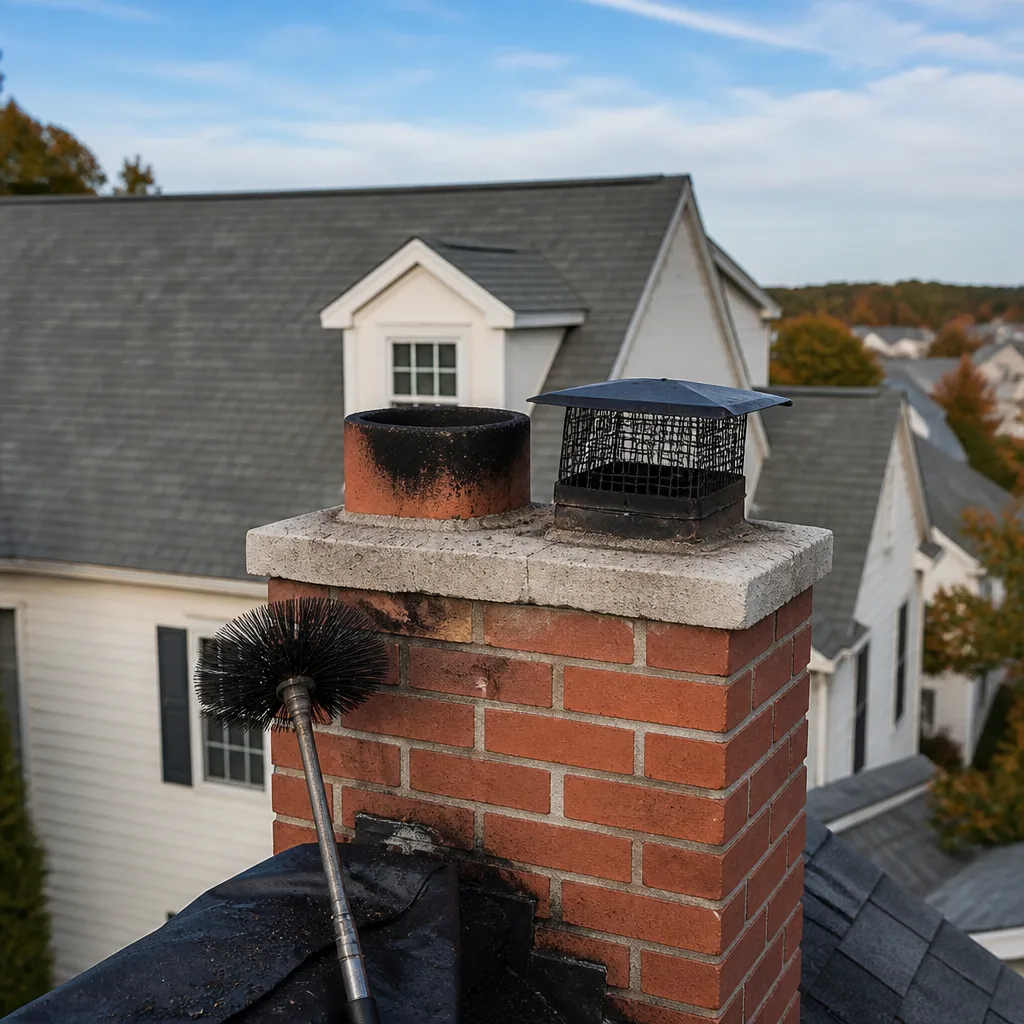 Sweep & inspection
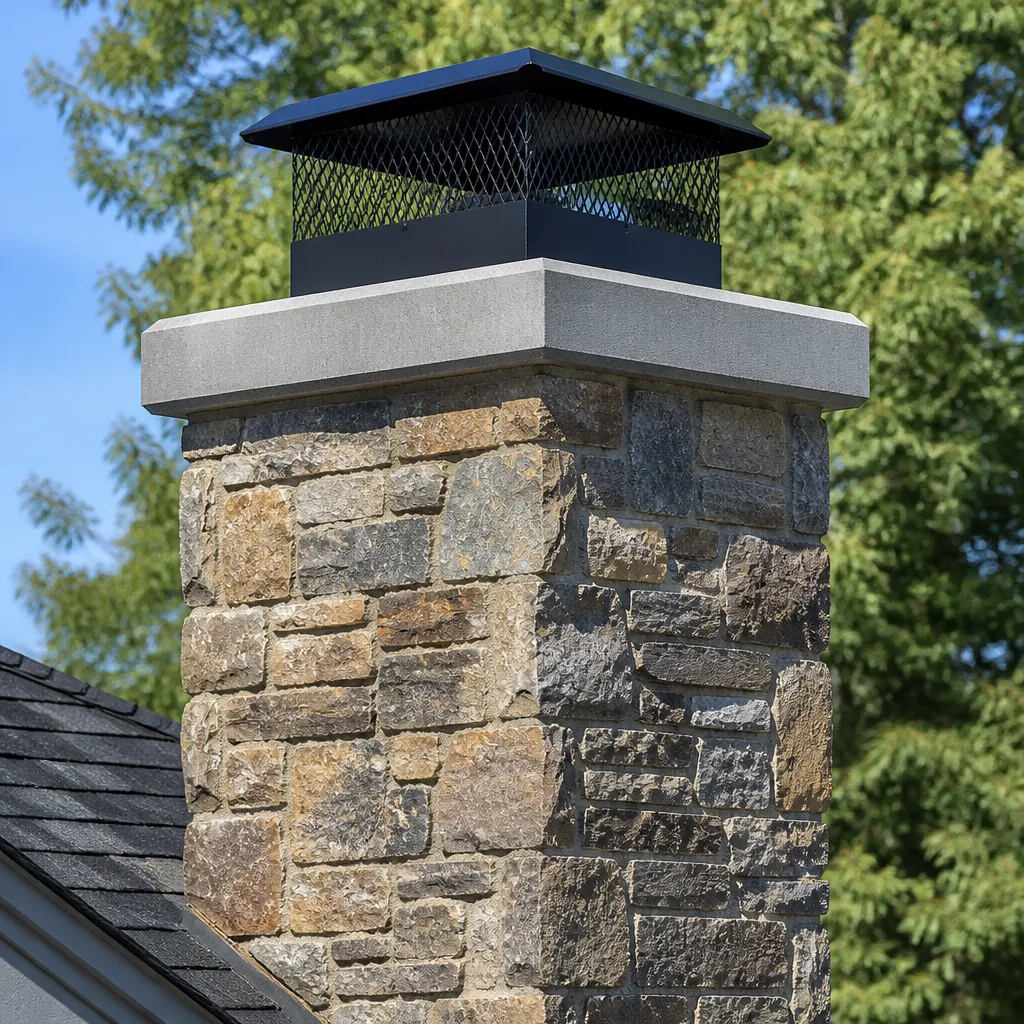 Caps & crowns
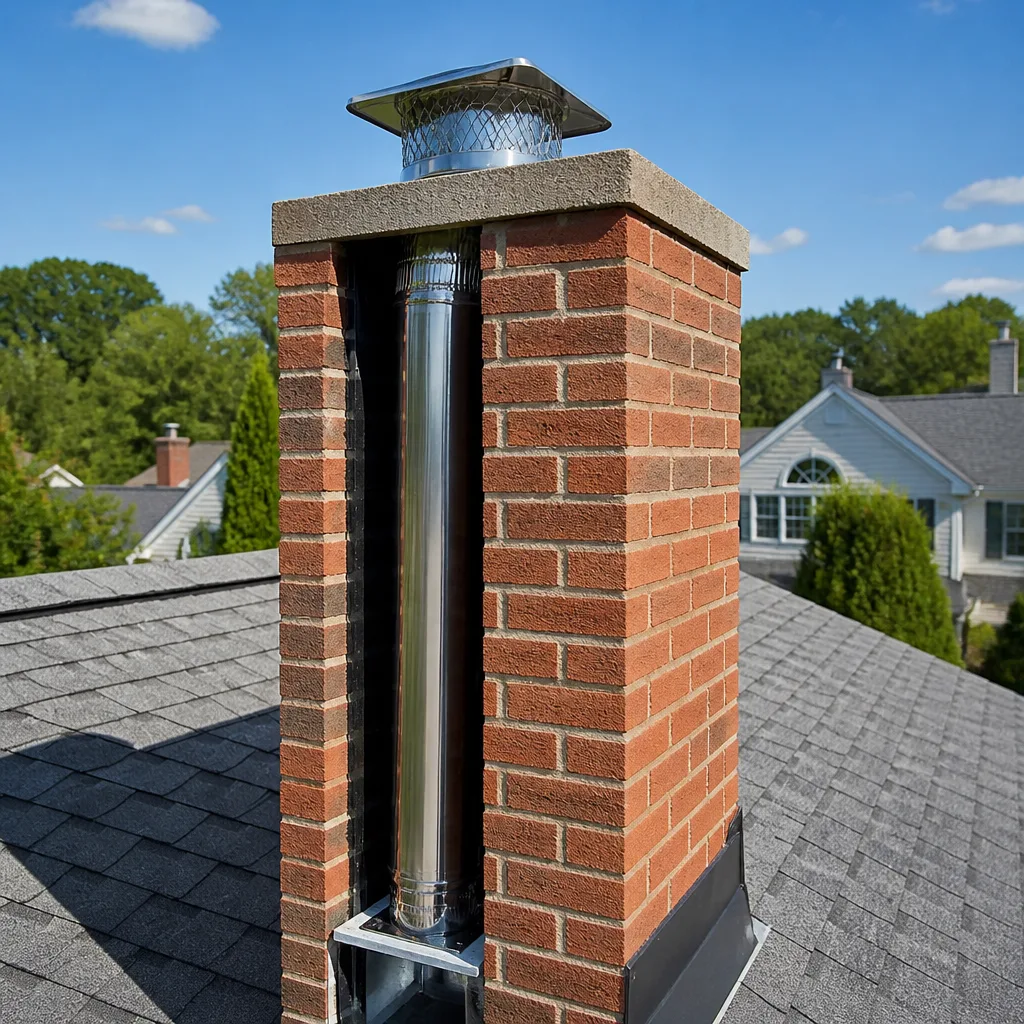 Flue relining
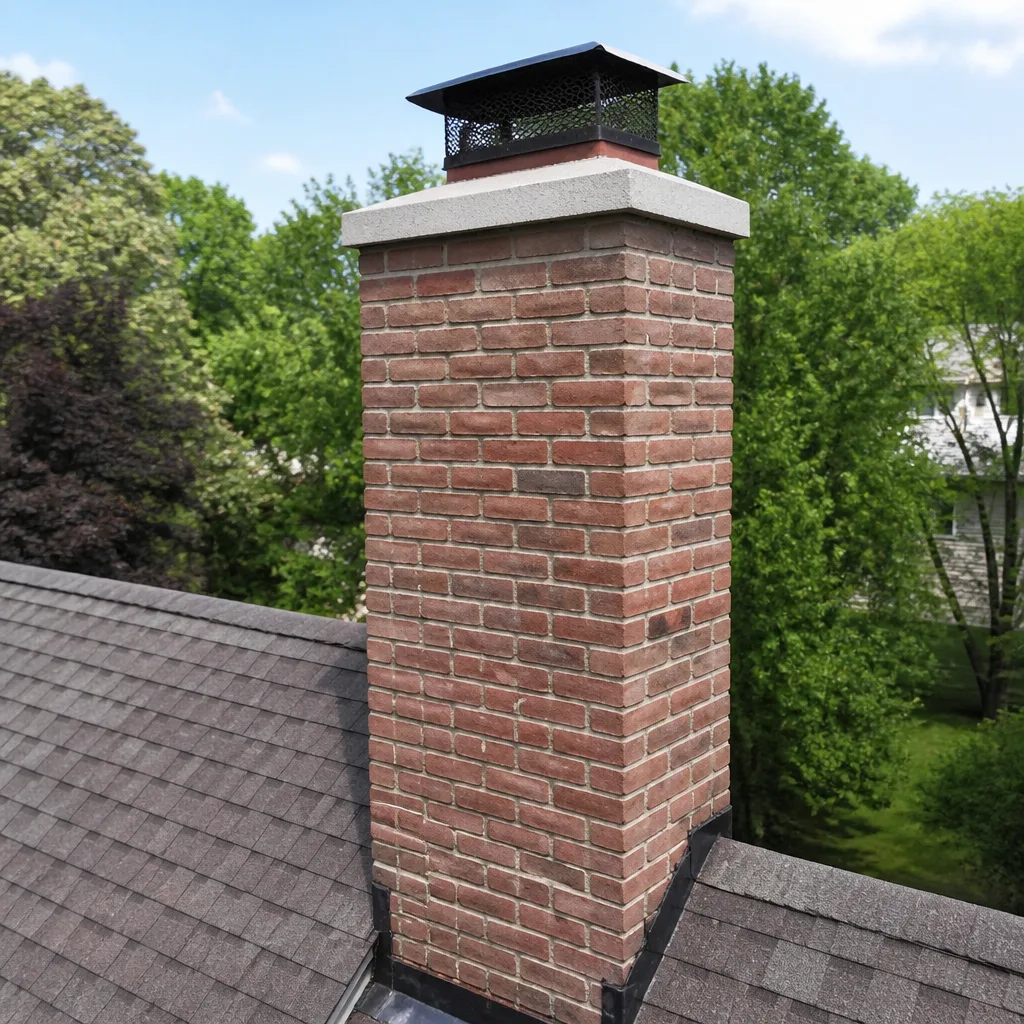 Masonry repair
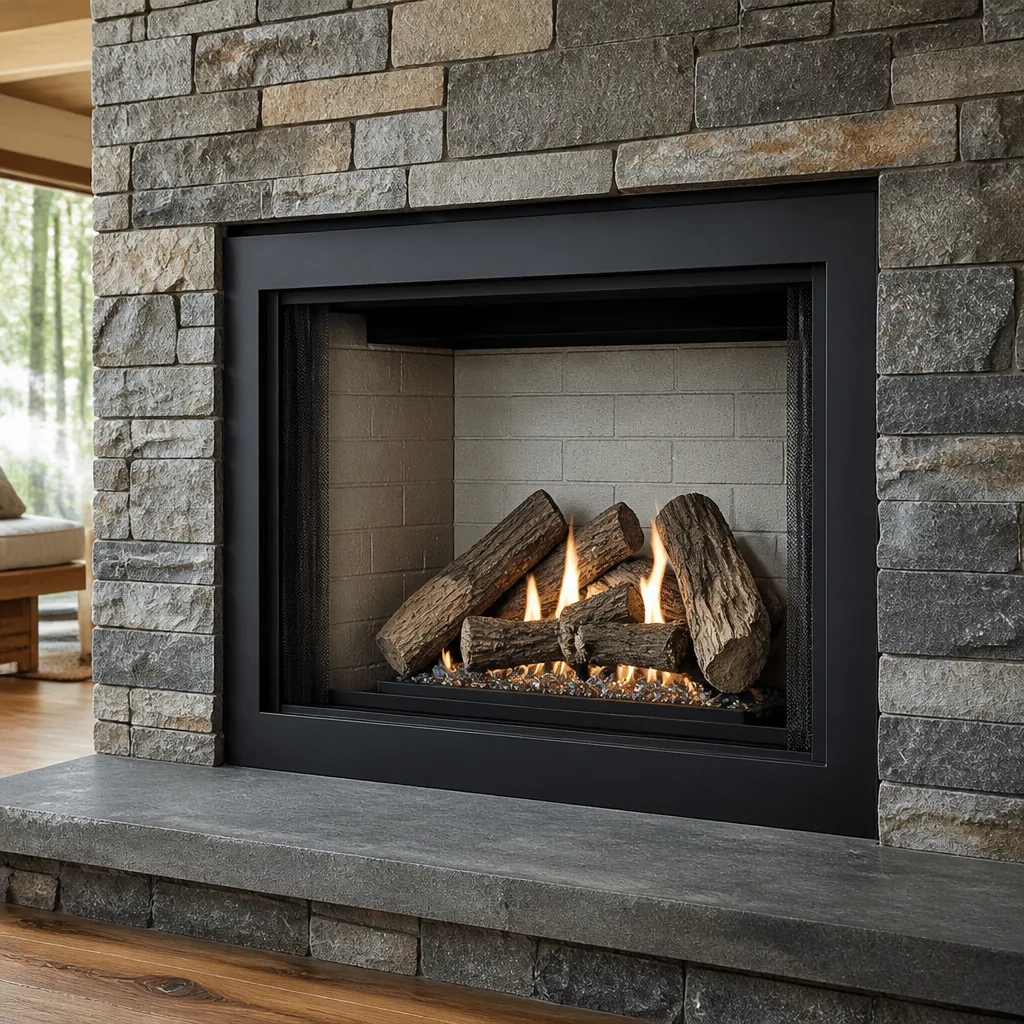 Gas fireplace service
Level 1 sweep and inspection to the NFPA 211 annual standard - flue, crown, cap, and flashing checked and photographed
Chimney sweep logs do not sweep chimneys. They loosen some creosote - which then falls where a brush and vacuum still have to collect it.
Chimney Sweep Troubleshooting in Charleston: Common Problems and How to Fix Them
If your chimney smokes back into the room, nine out of ten online sources will tell you to crack a window. That’s a workaround, not a diagnosis. The actual cause could be one of six different things, and only one of them gets solved by opening a window. We’ve seen the same pattern in Charleston for years: homeowners chase the symptom, buy a gadget, prop the damper open, and the problem comes back the first cold night. This guide changes the order of operations. We’ll map what you’re seeing (smoke, odor, slow draw, staining) to the part of your system actually responsible, then tell you which fixes a sweep handles and which need a mason. By the end you’ll know whether your Charleston chimney needs a brush or a rebuild.
Quick Answer
Most chimney problems in Charleston trace to one of five components: a blocked or undersized flue, a stuck damper, a damaged crown, a missing or wrong-size cap, or a failing liner. Smoke backdraft, cold-weather odor, and slow draws are symptoms, not causes, so the fix depends on which part is at fault. A camera inspection identifies the responsible component before anyone picks up a brush or a trowel.
Styles & brands we work with
- Sweep & inspection
- Caps & crowns
- Flue relining
- Masonry repair
- Gas fireplace service
Table of Contents
- The Symptom-to-Cause Map
- Why Charleston’s Cold-Climate Stack Effect Changes the Rules
- Backdraft and Smoke Entering the Room
- Odor When the Fireplace Isn’t Burning
- Slow Draw and Weak Fires
- Staining, Rust, and Water at the Chimney
- The Liner: Why It Drives Most Draft and Combustion Problems
- What You Can Safely Monitor vs. What Needs a Pro Now
The Symptom-to-Cause Map
Before you call anyone, identify what the chimney is actually doing. Symptoms fall into recognizable buckets, and each bucket points at a small set of components. This is the single most useful troubleshooting step a homeowner can take, because it stops you from paying for a sweep when the real problem is a crown, or paying for masonry when you needed a liner.
- Smoke rolls into the room when you light a fire: damper position, flue blockage, house pressure, or a flue that’s too short. Rarely the firewood alone.
- Chemical or ashy smell when there’s no fire: negative pressure pulling odor down the flue, or creosote and soot residue on the flue walls.
- Fire smokes weakly, burns lazily, hard to start: restricted airflow from a blocked cap screen, a partially closed or broken damper, or an undersized flue for the appliance.
- Dark staining on the chimney exterior or ceiling near the flue: a cracked crown, failed flashing, or a missing cap letting water and smoke where they don’t belong.
- Rust on the damper or firebox metal, white chalky deposits: water intrusion, usually from the top of the chimney down.
Each symptom maps to a component. A blocked cap screen and a failing liner can both produce a weak fire, but they need completely different fixes. That’s why the inspection comes first and the diagnosis second. In Charleston, our cold winters make some of these more likely than they’d be further south, which we’ll cover next.
Why Charleston’s Cold-Climate Stack Effect Changes the Rules
Chimneys don’t work on magic. They work on the stack effect: warm exhaust rises up the flue, cooler air is drawn in at the firebox to replace it, and the taller the temperature difference between inside and outside, the stronger the pull. A cold Charleston winter actually makes a well-tuned flue draft hard. But it also makes the failures more obvious and more frequent, because the gap between the fire’s heat and the outdoor air is doing so much of the work.
What that means here, specifically
- Cold outdoor air is dense. It pushes down harder on the top of the chimney, which means a marginal flue that drafts fine in October can backdraft in January. This is why “it worked all summer” is not a real test of your chimney in Charleston.
- Tight, well-sealed homes exaggerate the pressure war. Modern windows and weatherstripping keep cold air out, and they also starve the chimney of the makeup air it needs. A chimney competes with kitchen exhaust fans, bath fans, and dryers for the same air, and in a tight house it can lose.
- Warm chimneys that go cold all day develop odor problems. When a fire dies and the flue cools, the air in the chimney gets denser and sinks, carrying soot smell into the room. This is the classic Charleston “smoky smell with no fire” complaint, and it’s a stack-effect problem, not a dirty chimney problem.
- Freeze-thaw on the crown. Charleston’s winters swing above and below freezing, and a hairline crack in a masonry crown widens each time water gets in and freezes. A crown that looks fine in June can leak by February.
The upshot: an undersized or slightly blocked flue that would get by in a mild climate can fail outright here. And the component most responsible for a chimney’s ability to hold that draft is usually the one nobody looks at.
Backdraft and Smoke Entering the Room
Backdraft is smoke coming back down the chimney instead of going up it. It has six realistic causes in a Charleston home, and opening a window addresses only one of them, the pressure imbalance. The other five keep right on happening the moment the window closes.
- The damper is closed or broken. A damper that hangs up on a soot ledge or is rusted shut looks open from the handle but isn’t. If the fire smokes when you first light it and then settles once it’s roaring, suspect the damper and the flue.
- The flue is blocked. Nesting material, a collapsed liner section, or heavy soot buildup narrows the flue until smoke can’t get through. This is the one that can be dangerous, because it forces carbon monoxide into the room instead of up the chimney.
- The chimney is too short or topped out below the nearby roofline. A chimney that doesn’t clear the surrounding structure gets its exhaust caught in the pressure zone around the roof, and smoke tumbles back down.
- Negative pressure in the house. The stack effect’s flip side. A tight house running a bath fan or a strong kitchen exhaust can literally suck the smoke backward. Opening a window relieves it, which is why the bad advice circulates.
- The fireplace is oversized for the flue. A big open firebox with a flue too small to serve it dumps more smoke than the flue can carry.
- Weather and wind. Certain wind directions push down the chimney, especially if the cap is wrong or missing.
Diagnosing which of the six you’re dealing with is a camera and pressure test job, not a guess. If you smell smoke with no visible fire, or smoke rolls back when you light, stop using the fireplace and get it inspected. A chimney sweep reveals blockages and soot load; a camera inspection reveals the liner and the top of the flue.
Odor When the Fireplace Isn’t Burning
A cold chimney that smells like soot, ash, or a chemical tinge usually isn’t dirty; it’s sinking air. When the flue is the same temperature as the room and the outdoor air is colder and denser, the air in the chimney settles downward, dragging soot residue and creosote smell with it. It’s a stack-effect problem, and it interacts with your house pressure.
What actually helps, in order of effort:
- Seal the firebox when it’s not in use. A glass door or a tight damper that fully closes blocks the sinking air out of the living space.
- Check the cap and the top of the flue. A cap that doesn’t block rain but does vent properly keeps moisture out, and a dry flue smells far less than a damp one.
- Have the flue cleaned and inspected. A heavy creosote load yields more smell, and it also raises fire risk, so cleaning serves two purposes.
- Don’t try to burn the smell away. A hot fire on a heavy creosote load is exactly what starts a chimney fire.
Odor that shows up for the first time after a cold snap, and disappears in warm weather, is nearly always the stack effect. Odor that shows up even in mild weather points somewhere else: a dead animal or nesting material in the flue, or a failed liner. Both need a professional look. In Charleston, where the winters are cold enough to trigger the sink every year, a cap and a properly closed damper do most of the work.
Slow Draw and Weak Fires
A fire that won’t get going is telling you the system is starved for air. That starvation has a handful of common causes, and each one is fixed differently. The most easily wasted money in chimney repair is spending it on firewood when the flue is the problem.
- A clogged cap screen. The screen on top of the cap gets plugged with soot and nesting debris, so air can’t get through. This is the cheapest fix on the list and the most often missed.
- A partially blocked flue. Soot, a partial collapse, or a dislodged liner section restricts flow. Only an inspection finds it.
- An undersized flue for the firebox or insert. A wood insert or a fireplace fitted to a flue that’s too small for it will always struggle, regardless of the firewood.
- A broken or missing damper. Whether it won’t close or won’t open, the whole draft balance shifts.
- The wrong firewood. Wet or unseasoned wood produces more smoke and less heat, so it makes a marginal draft worse. This is the one cause that’s really on the homeowner.
- House pressure working against the chimney. Bath and kitchen fans, dryers, and tight construction.
The order of operations: check the cap screen, then check that the damper actually moves, then get a camera inspection on the flue and look at the liner. That last step settles the question the most. In Charleston, where the stack effect can mask a weak flue in fall and expose it in the dead of winter, waiting for “it’ll draft better when it’s colder” usually backfires.
Staining, Rust, and Water at the Chimney
Water is behind more chimney damage than fire. Brown staining on the interior or exterior, rust on the damper, white chalky deposits on the masonry (efflorescence), and cracked masonry joints all point to water getting in where it shouldn’t. The usual entry points, in order:
- The cap. A missing or wrong-size cap lets rain straight down the flue. An intact, correctly sized cap is the cheapest protection you can install.
- The crown. The sloped concrete at the top of the chimney sheds water away from the flue. Once it cracks or spalls, water gets into the masonry. In Charleston’s freeze-thaw winters, a hairline crack in a crown gets wider over the season.
- Flashing at the roof line. Where the chimney meets the roof, water gets behind a failed flashing and shows up on the ceiling well away from the chimney itself.
- Failed mortar joints. Repointing is the fix, and it’s usually not urgent in June but can’t wait until full masonry failure in a cold snap.
The chimney cap & crown work is the first line of defense, and it’s the part most homeowners overlook. The catch is that a cap sometimes has to come off or go back on before anyone can see what’s under it, which is where a lot of troubleshooting starts. In our experience, capping a chimney that had been open for years often reveals hidden masonry damage underneath, because the water had been entering unfiltered. Expect that.
The Liner: Why It Drives Most Draft and Combustion Problems
Almost every troubleshooting path above ends at the same component: the chimney liner. The liner is the tube inside the chimney that carries smoke and combustion gases up and out. It’s the part most DIY guides and symptom charts skip, and it’s usually the determining factor in whether a chimney drafts well, stays clean, and vents safely.
A failing liner causes problems that don’t look like liner problems: a weak fire, a smoky smell, a flue that’s hard to clean, backdraft that comes and goes with the wind. When the liner is cracked, misaligned, short of the top, or wrong for the appliance, the whole system’s performance drops. A sweep that cleans the flue but doesn’t inspect the liner hasn’t really checked the chimney.
Two common liner fixes
Resurfacing with HeatShield. When the existing liner is still structurally sound but has cracks or gaps, HeatShield lets us restore the flue from the inside without tearing the whole liner out. It’s a resurfacing system that saves the cost and disruption of a full replacement, and it’s the option sweep-only companies can’t offer. Restoring a liner this way is engineer-approved and done in place.
Flexible liners with DuraFlex. Older Charleston flues often have offsets or irregular shapes that rigid liners can’t navigate. A DuraFlex flexible liner follows the flue and works in configurations where a rigid system would need major masonry surgery. The result is a continuous, sealed liner that vents predictably.
Both fixes share a principle: the liner has to be continuous, correctly sized, and properly vented or the symptoms come back. The correct one for your chimney comes down to the inspection and the camera evidence.
What You Can Safely Monitor vs. What Needs a Pro Now
Not every symptom needs an emergency call, and not every symptom can wait. Here’s a practical split. The reason to sort this out early is that in Charleston, a slow-growing problem that would be minor in summer can turn into structural damage or a dangerous flue failure by winter.
Safe to monitor between inspections
- A seasonal smell that appears only in cold weather and clears when you seal the firebox.
- Occasional smoke that comes and goes with a specific wind direction.
- Rust or staining that’s fresh and hasn’t reached the ceiling or wall.
- Many small cracks in exterior mortar you can see, without spalling masonry.
Needs professional inspection before the next fire
- Smoke rolling back into the room when you light a fire.
- Any smell of smoke or gas with no fire burning.
- A visible crack or gap in the liner or the firebox, or pieces of liner falling into the firebox.
- Water actively coming into the house around the chimney.
- Masonry that’s loose, spalling, or shifting.
- A chimney fire, or a fire that burned unusually hot or made a roaring sound.
A cracked or separated liner is the single most dangerous condition on that second list. It can let carbon monoxide into the living space, and no amount of opening windows fixes it. If you’re unsure which list you’re on, the answer is an inspection. Call (833) 509-4937. We answer 24/7. Fast dispatch from 7am to 7pm, Sunday through Friday.
Common Mistakes to Avoid
- Opening a window and calling it fixed. It relieves the pressure symptom but leaves the real culprit, usually a blocked or undersized flue or a failing liner, untouched. The smoke comes back.
- Buying a cap before the inspection. A cap can mask or reveal a structural problem underneath, and the wrong size makes the draft worse. Get the inspection, then the cap.
- Assuming no fire means no problem. Many Charleston homeowners find their liner damage only when they sell the house, because a chimney that hasn’t been used in years doesn’t show symptoms. An annual inspection catches it early.
- Cleaning the flue and skipping the liner. A sweep that only brushes the flue leaves the most important component unexamined. Ask for a camera inspection every time.
- Burning wet wood to “test” the draft. Unseasoned wood makes a marginal chimney worse and adds more creosote. It’s a test that can only fail.
- Letting a slow leak go through the winter. A cracked crown in Charleston gets worse with every freeze-thaw cycle, and what starts as staining can become masonry repair by spring.
- Hiring a handyman for a chimney job. Chimney systems involve liners, crowns, and firebox components that need specialist materials like HeatShield, DuraFlex, or Olympia Chimney parts, not a general tool kit.
If you’re tired of chasing symptoms, the Charleston Chimney Sweep Pros team handles the whole system, so we can find the cause and fix it in the same visit. We work with professional-grade brands including HeatShield, Gelco, Olympia Chimney, and Famco, and we don’t hand off the repair to someone else.
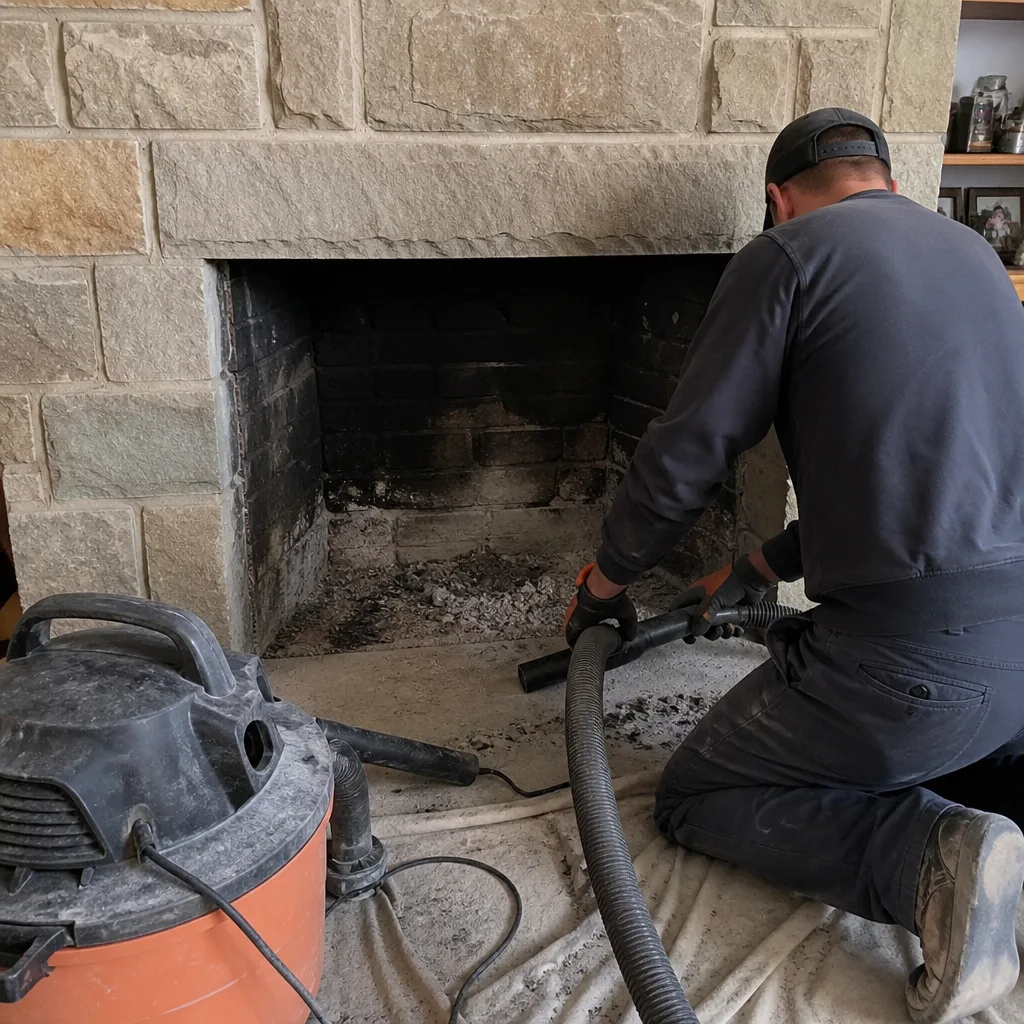
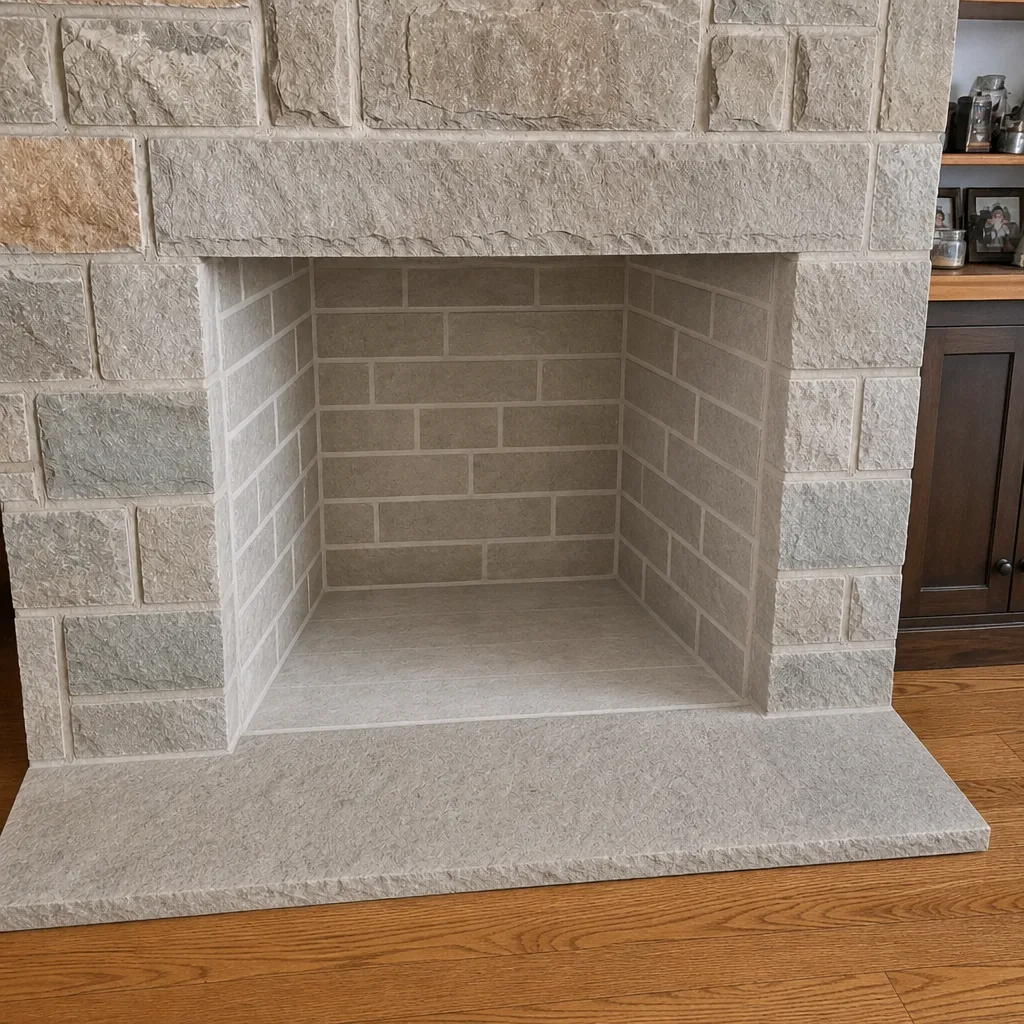
See the difference
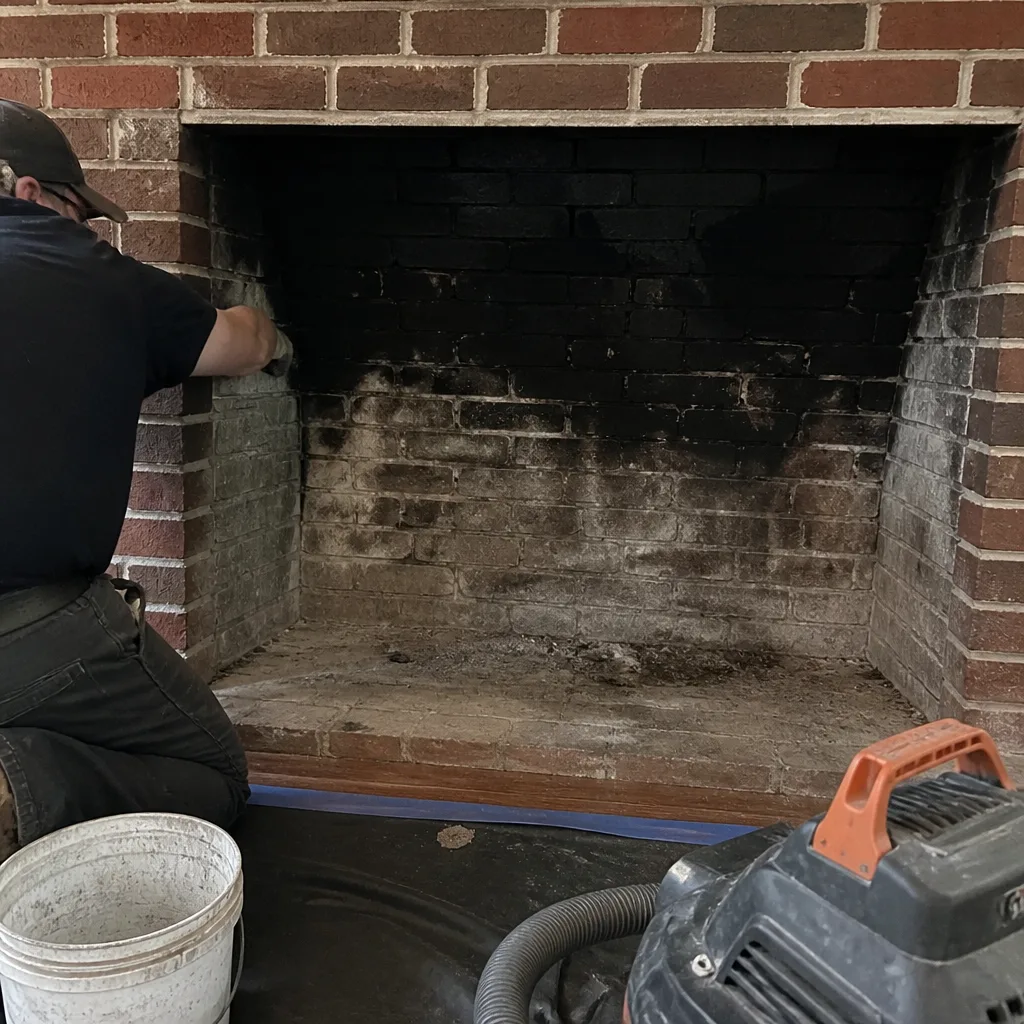 Before
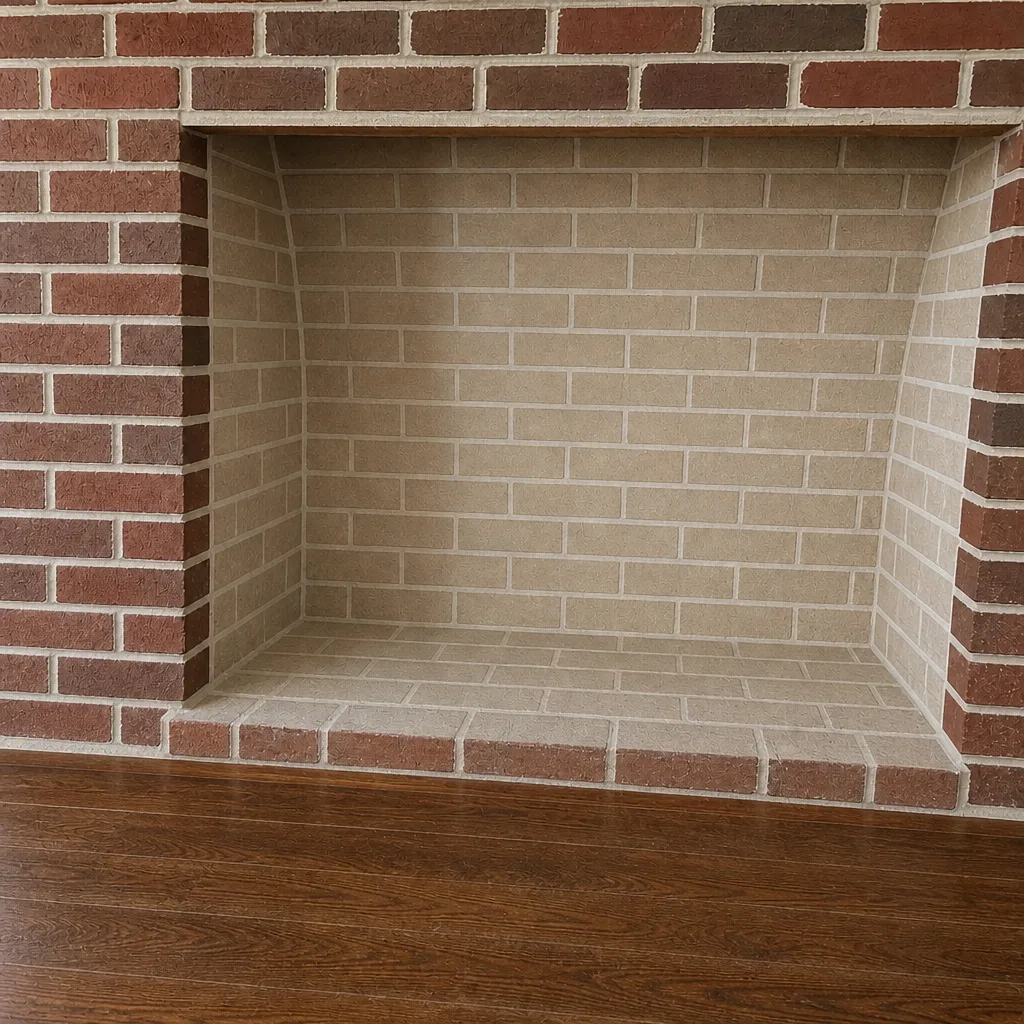 After
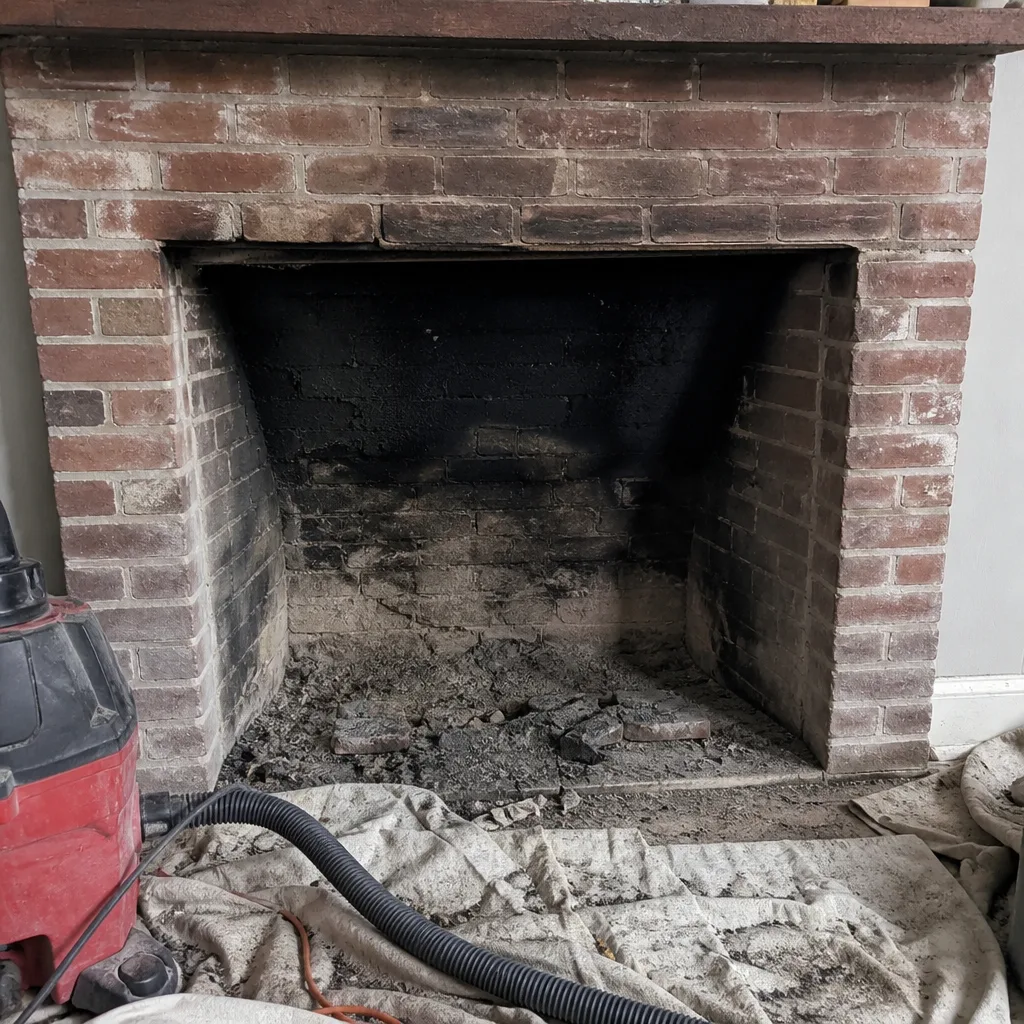 Before
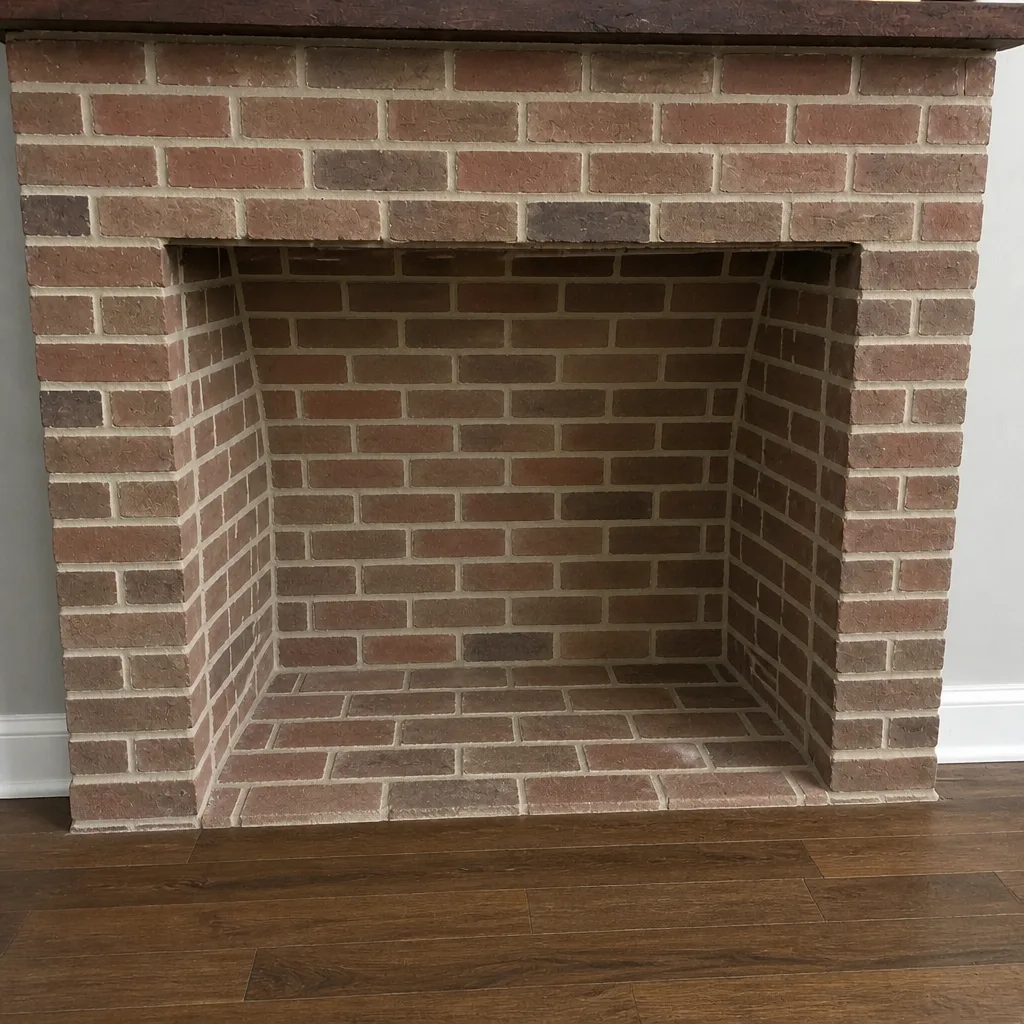 After
 Before
 After
When to Call a Professional
Call a professional when a symptom has a safety consequence. Smoke entering the room, any smell of smoke with no fire, a crack or gap in the liner or firebox, water actively entering the house, and loose or shifting masonry are all call-now conditions. A chimney fire, or a fire that burned hotter and louder than usual, also means a full inspection before the next fire, because the heat can crack a liner or damage the firebox without leaving obvious signs from the room. Less urgent: a seasonal odor you can seal off, wind-dependent smoke, and staining you can see but that hasn’t spread. Even those should be inspected before the weather turns, since in Charleston a cold snap brings out the worst in a marginal flue. Charleston Chimney Sweep Pros offers free estimates in Charleston. Call (833) 509-4937.
Frequently Asked Questions
Yes. Intermittent backdraft usually means the chimney is marginal, not that it’s fine. The cause is one of the six on the symptom map, and the most likely candidates, a partially blocked flue or a failing liner, don’t announce themselves every time. An inspection catches the cause before it turns into a safety problem. Call (833) 509-4937 for an exact quote.
You can adjust the damper, check the cap screen, and confirm the fire is getting makeup air, and those are worth doing first. Everything past that, including anything involving the flue or the liner, needs a camera and a trained eye. The dangerous part is that a smoky fire is often a carbon-monoxide warning sign, and that’s not something to troubleshoot from the living room. Call (833) 509-4937.
Once a year, ideally before burning season. Charleston’s cold winters and freeze-thaw swings put more strain on the crown and the flue than year-round mild weather would, so the annual inspection matters here. A sweep keeps the flue clean; the inspection finds the liner and structural problems a brush can’t see. Call (833) 509-4937.
It covers the flue, the liner, the damper, the firebox, the cap, the crown, and the exterior masonry, with camera evidence of everything inside the flue. That’s why we don’t call a sweep finished until the liner has been looked at. You should get photos and a plain-language report, not just a verbal verdict. Call (833) 509-4937 for an exact quote.
It’s a different job for a different condition. When the existing liner is structurally sound but cracked, HeatShield resurfacing restores it in place and saves the cost and disruption of replacement. When the liner is failing structurally, a full flexible liner like DuraFlex is the correct fix. The inspection decides which. Call (833) 509-4937.
It’s common, and it’s the stack effect: cold, dense outdoor air pushes the chimney’s air down, carrying soot smell into the room. Sealing the firebox and keeping the flue dry reduces it. If the smell shows up in mild weather too, that’s a different problem, likely nesting material or a failed liner, and it needs an inspection. Call (833) 509-4937.
The Bottom Line
Chimney troubleshooting isn’t about chasing the symptom; it’s about tracing it to the component responsible. In Charleston, the cold-climate stack effect makes backdraft, winter odor, and freeze-thaw crown damage more common, and it exposes marginal flues that would pass in a warmer place. Map what you’re seeing to the flue, damper, crown, cap, or liner before spending anything. Monitor the low-risk symptoms; get the high-risk ones inspected before the next fire. And remember that the liner sits behind nearly every draft and combustion problem, so a sweep without a liner inspection is only half a job. If it’s part of your chimney, it’s in our scope: fireplace repair, liners, caps, crowns, and sweeps, all handled by the same team that found the problem. Call Charleston Chimney Sweep Pros at (833) 509-4937 for a free estimate. We answer 24/7. Fast dispatch from 7am to 7pm, Sunday through Friday.
Written by the team at Charleston Chimney Sweep Pros.